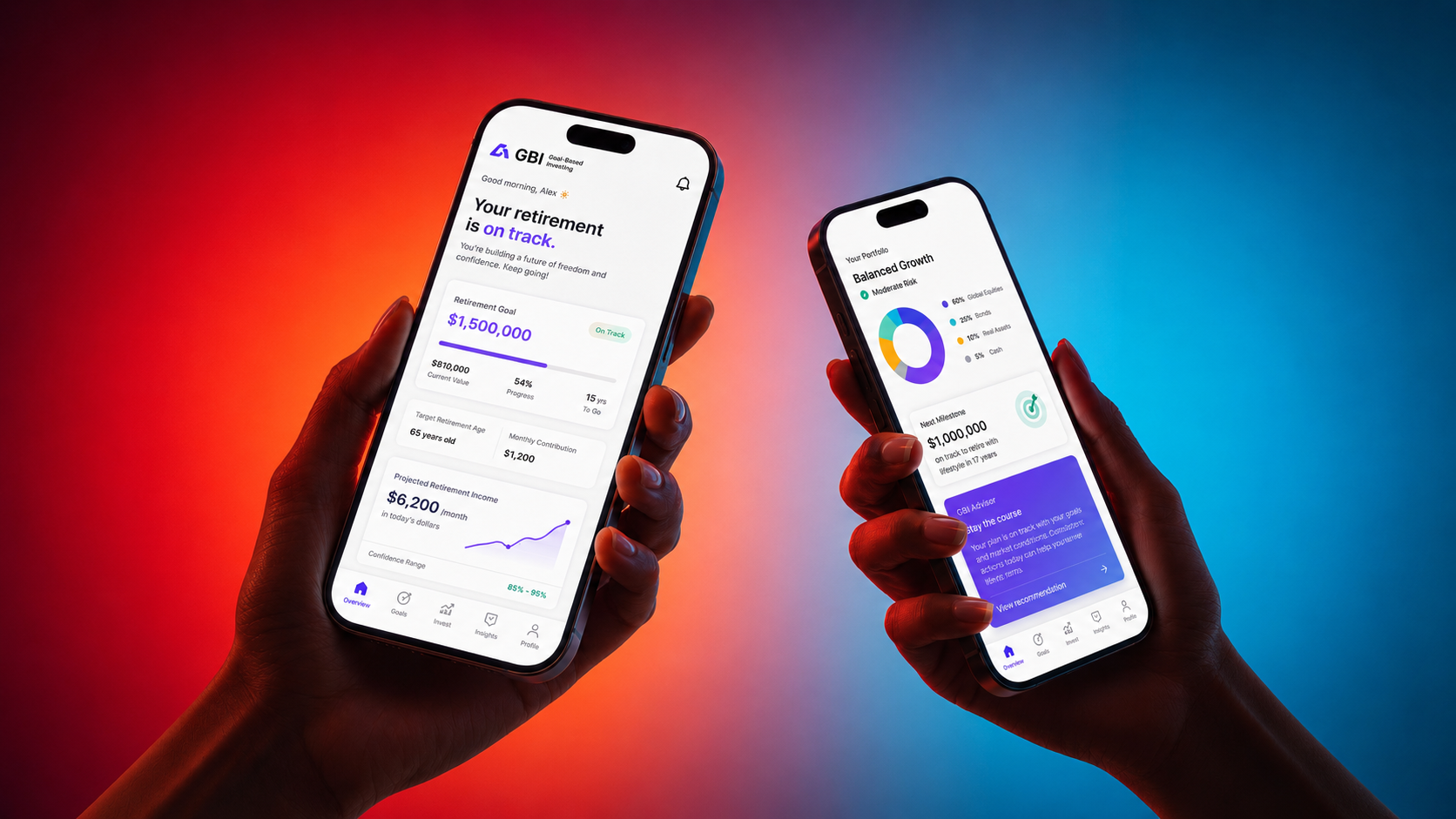
We began by framing the service around a difficult user problem: retirement planning requires long-term thinking, but many users struggle to translate abstract future goals into concrete investment actions. The research focused on how users understand goal-based investing, how they respond to AI-supported consulting, and what information helps them feel confident enough to adjust or manage their retirement portfolio.
This phase helped us define the core evaluation areas for the study. We needed to understand whether the proposed service concept explained its value clearly, whether users could interpret goal achievement probability, and whether rebalancing guidance felt like meaningful support rather than another complex investment task.
We conducted in-depth interviews and usability testing with retirement account holders in their 30s and 40s. Participants interacted with both the existing and proposed service flows, allowing us to observe how they understood the concept, interpreted key screens, and moved through goal-setting and investment-management tasks.
The testing showed that the proposed version improved overall satisfaction and service explanation compared with the existing experience. However, users often changed default values after selecting a goal, struggled to estimate large retirement target amounts, and needed clearer connections between monthly expected income, target amount, contribution amount, and future portfolio management.
We analyzed interview observations and card sorting results to understand which information users considered important when making retirement investment decisions. Users paid close attention to concrete, comparable information such as risk level, return, fees, goal achievement probability, and portfolio changes.
The research also showed that different users needed different levels of detail. Low-engagement users were more interested in being guided and managed, while high-engagement users wanted to inspect returns, product choices, and rebalancing logic more closely. This made it clear that the experience needed to support both quick understanding and deeper verification.
We translated the findings into service principles for making retirement investment planning easier to understand and act on. The service needed to explain goal achievement probability in plain terms, connect retirement targets to monthly income expectations, and show how changes in contribution amount, retirement age, or portfolio strategy would affect the user’s plan.
The final direction emphasized guided decision-making rather than full automation. AI-supported consulting could help users interpret options, monitor changes, and understand when rebalancing may be needed, but the experience still had to preserve clarity, control, and confidence at each decision point.
The practical insights gathered from this product research were formalized and extended into academic HCI studies. Our findings on user expectations for AI-driven pension management, retirement confidence, and proactive management behaviors were published and presented at:
- HCI Korea 2025: Exploring UX Elements of AI-based Pension Management Services for Retirement Confidence and Proactive Pension Management Behavior
- HCI International 2025: AI, My Financial Advisor?: Expectations for AI-Driven Pension Management Services


